

Publish Your Application
-
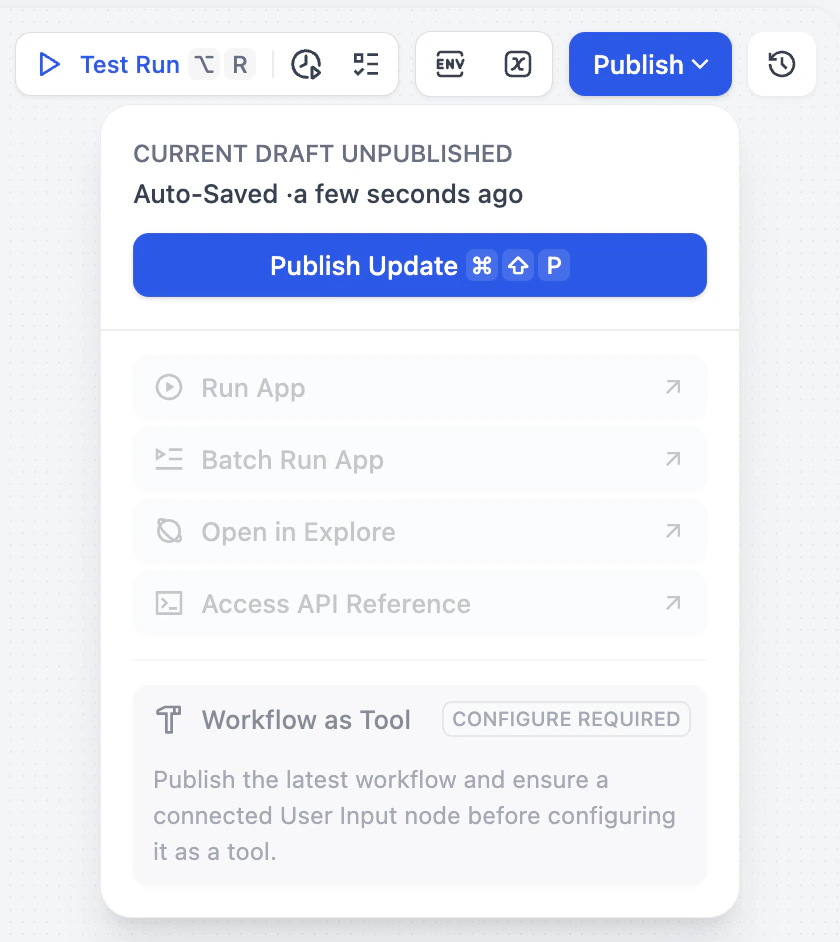
Move your mouse to the top right corner of the canvas and click the Publish button. You’ll see other buttons light up.
Whenever you make changes to your workflow, you must click Publish → Update to save them.If you don’t update, the live version will remain the old one.
-
Once published, the gray-out buttons turned clickable now.
-
Share Your App
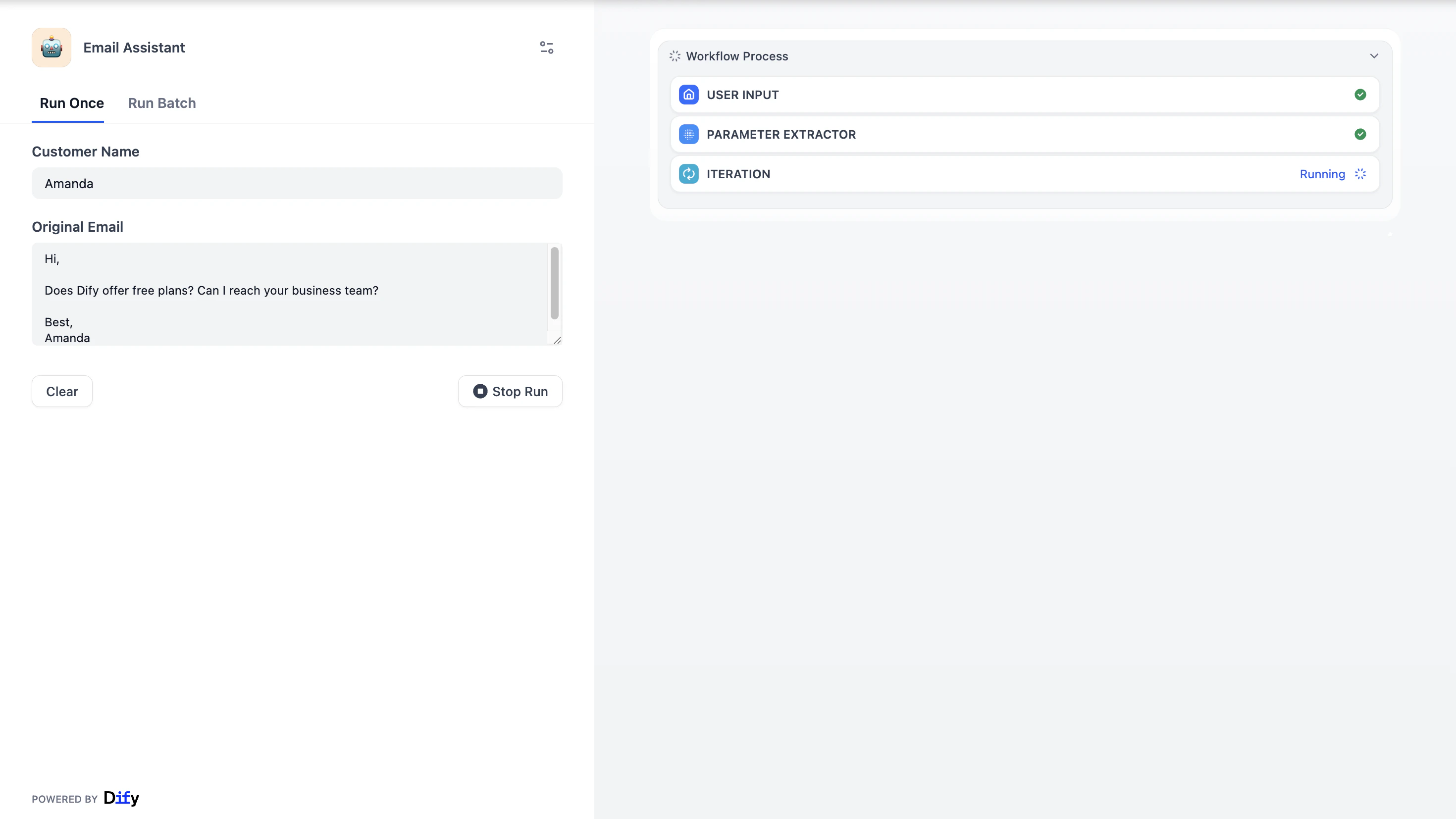
Click Run App. Dify automatically generates a WebApp for you. This is a ready-to-use chat interface for your Email Assistant.
You can send this URL to colleagues or friends. They don’t need to log in to Dify to use the email assistant.
-
Batch Run App
If you have 100 emails to reply, copying and pasting them one by one will drag you down.
In Dify, all you need to do is to prepare a CSV file with the 100 emails. Upload it to Dify’s Batch Run feature. Dify processes all 100 emails automatically and gives you back a spreadsheet with all the generated replies.
Since we set specific variables (like
email_content), your CSV must match that format. Dify provides a template you can download to make this easy.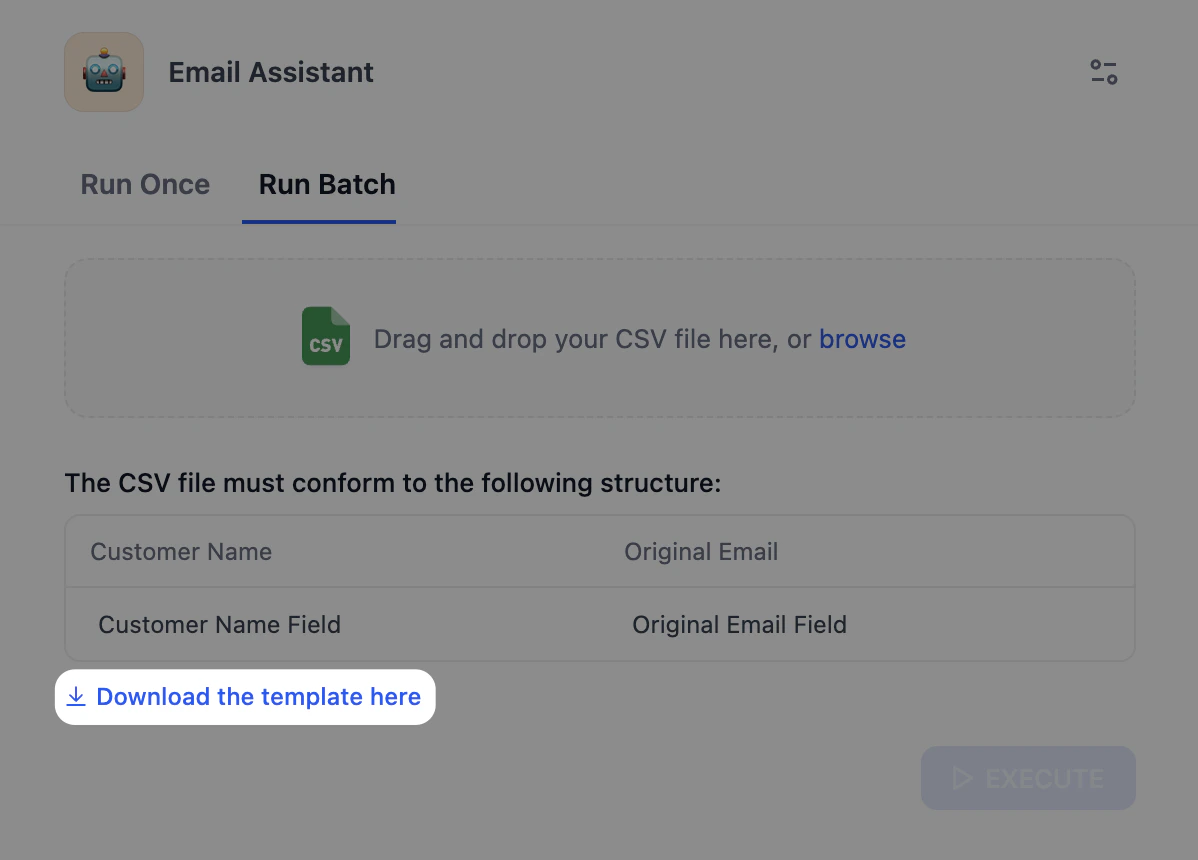
-
Others
- Access API Reference: If you know coding, you can get an API Key to integrate this workflow directly into your own website or mobile app
- Open in Explore: Pin this app to your workspace sidebar for quick access next time
- Publish as a Tool: Package your workflow as a plugin so other Agents can use your Email Assistant as a tool
-
Share Your App
Click Run App. Dify automatically generates a WebApp for you. This is a ready-to-use chat interface for your Email Assistant.
You can send this URL to colleagues or friends. They don’t need to log in to Dify to use the email assistant.
Monitor Your App
As the creator, you need to understand the status of this assistant. By monitoring and using logs, you can check the health, performance, and costs.The Command Center: Monitoring
Click Monitoring on the left sidebar to see how your app is performing.| Name | Explanation |
|---|---|
| Total Messages | How many times users interacted with the AI today. It shows how popular your app is. |
| Active Users | The number of unique people engaging with the AI. |
| Token Usage | How much tokens the AI used. Watch for sudden spikes to control costs. |
| Avg. User Interactions | Do the users ask follow-up questions? |
The Magnifying Glass: Logs
Logs record the details of every single run: time, input, duration, and output. To access detailed records, click Logs in the left sidebar. Why Logs?- Debugging: User says It doesn’t work? Check the logs to replay the crime scene and see exactly which node failed.
- Performance: See how long each node took. Find the blocker that is slowing things down.
- Understand Users: Read what users are actually asking. Use this real data to update your Knowledge Base or improve your Prompts.
- Cost Control: Check exactly how many tokens a specific run cost.
| Name | Explanation |
|---|---|
| Start Time | The time when the workflow was triggered |
| Status | Success or Failure. |
| Run Time | How long the whole process took. |
| Tokens | The tokens consumed by this run. |
| End User or Account | The specific user ID or account that initiated the session. |
| Triggered By | WebApp interface or called via API. |
- Observe: Look at the Logs. What are users asking? Are they happy with the answers?
- Analyze: Hallucination happens on certain questions or some tools run out often
- Optimize: Go back to the Canvas. Edit the Prompt, add a document to the Knowledge Base, or tweak the workflow logic
- Publish: Release the upgraded version